Getting tense
Cofounder conflict
Cofounder conflict rarely starts with a blowup. It creeps in: topics you avoid, decisions made alone, exhaustion nobody mentions. As long as it stays between you, you can defuse it. Later on, it takes someone else to fix it.
Most guides on cofounder disputes are about clauses and courtrooms. This one is about the stage before the lawyers: spotting the signs, figuring out where you stand, and knowing what to do at each step.
The three stages of cofounder conflict
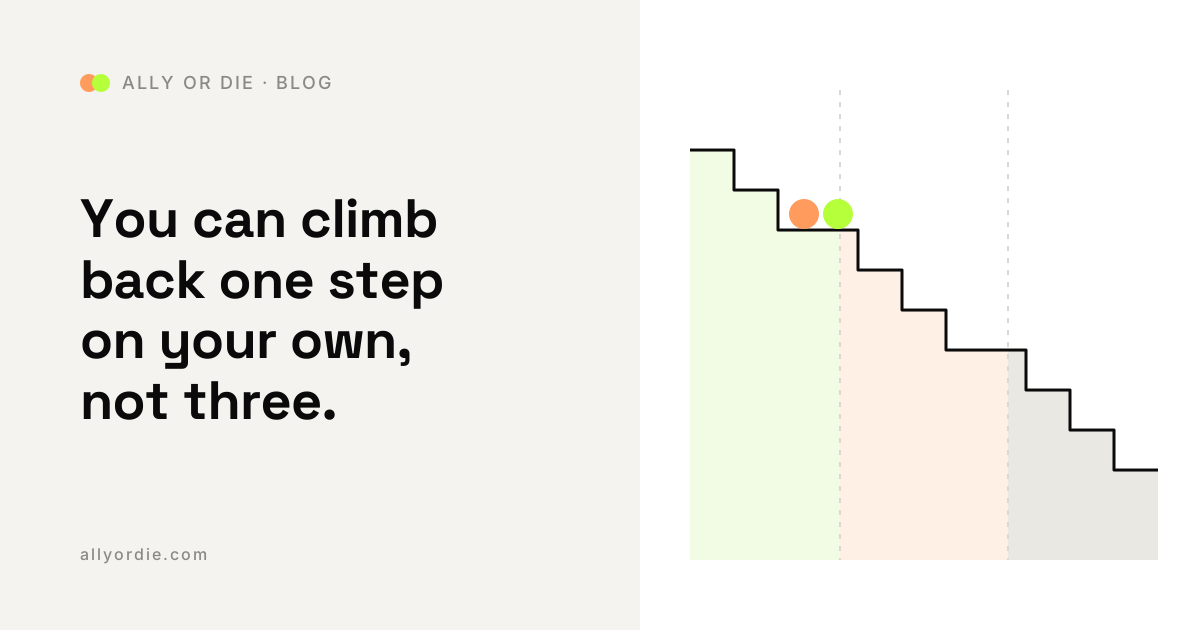
- Stage 1You're still talkingYou can still work it out between you, as long as you name what's going on.
- Stage 2You need someoneA cofounder coach can help restart a conversation that's going in circles.
- Stage 3You've stopped talkingA mediator, then often the lawyers.
Read
Common questions
How do you resolve conflict with your cofounder?
Name it early, between the two of you, before it settles in. Start with one open question, not a list of complaints: “Are you feeling the same tension I am?” Talk about what happened and what each of you needs, not about who's wrong. If you're not ready, take stock on your own first so you know what you want to say.
What are the stages of cofounder conflict?
We see three. First, you're still talking: you can work it out between you, as long as you name it. Then the conversations go in circles: you need an outside person, often a cofounder coach. Finally, you've stopped talking: it goes to a mediator, then often to the lawyers. Friedrich Glasl's model of conflict escalation describes the same slide, in nine steps.
What should you do if your cofounder stops showing up?
Before you decide they've checked out, look at what's changed: their role, their motivation, their life outside the company, or what you expect from each other. Then start the conversation, without putting them on trial. A cofounder who checks out is usually a sign of a conversation that never happened, and rarely of bad faith. If nothing changes, your founders' agreement and a lawyer will tell you what your options are.
Who can help with a cofounder dispute?
It depends on the stage. While you're still talking but going in circles, a cofounder coach. When you've stopped talking or splitting up is on the table, a mediator. For equity, removing someone from their role or your founders' agreement, a corporate lawyer. The longer you wait, the more the next option becomes the only one left.
How do you tell real conflict from a rough patch?
A rough patch is about one issue and ends once the issue is settled. Conflict sets in when the same disagreements keep coming back in different forms, when you avoid each other, or when you start looking for allies. If you've been asking yourself this for weeks, that's already a sign.
Other topics
New here? Start with the manifesto or the Cofounder Cycle.